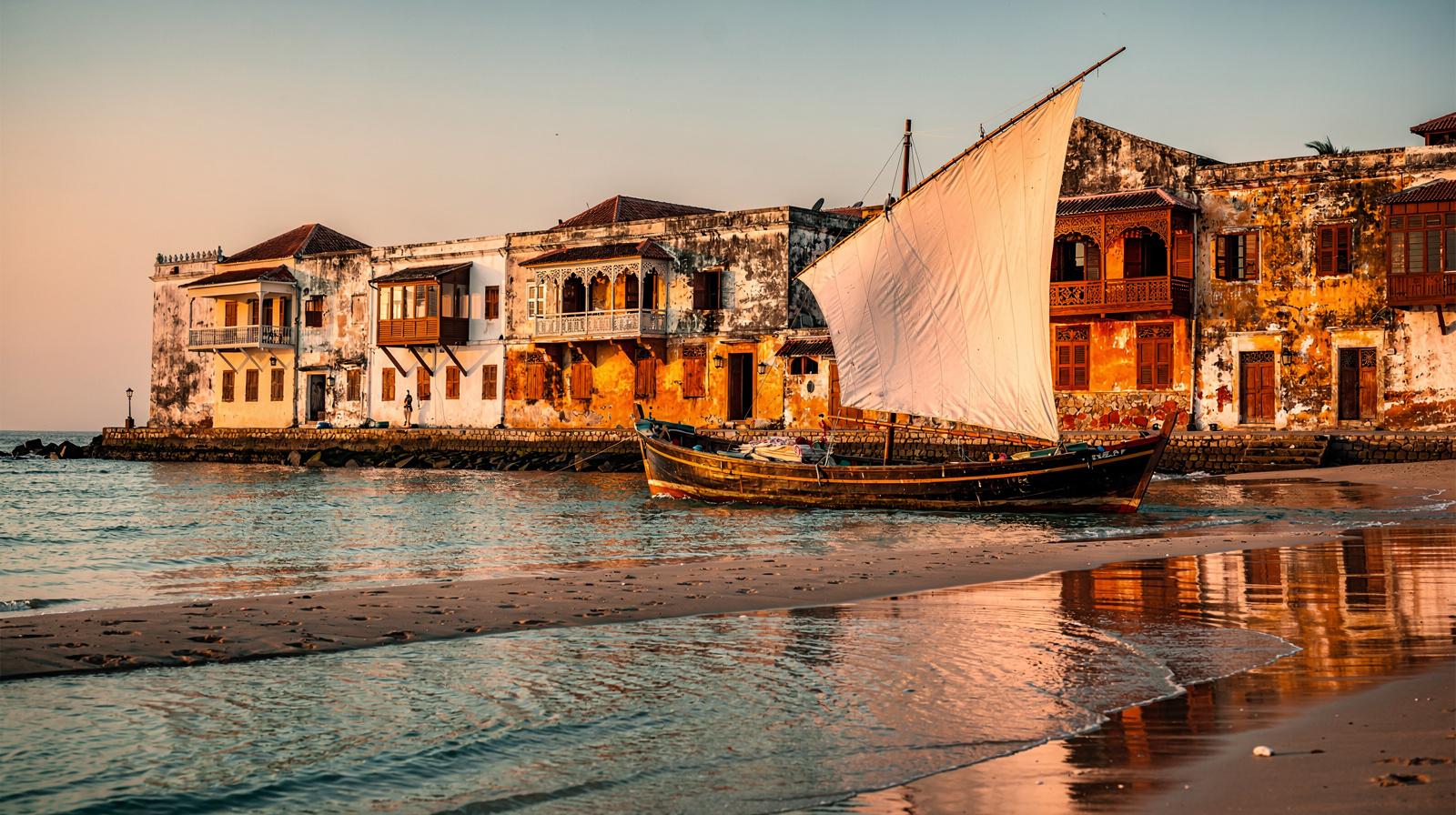
There is a month when Zanzibar gets everything right at once, and you are standing in it. July sits in the heart of the island’s long dry season: the humidity of the rains has gone, the air runs a degree or two cooler under the Kusi trade wind, and the Indian Ocean settles into the kind of clarity that makes snorkelling boats look like they are floating on glass. The same wind that dries the island out also happens to blow at a steady 15 to 25 knots across a flat southern lagoon — which is why half the kitesurfers in Europe are quietly booking flights.
Stone Town first, always
Everyone comes for the beaches and everyone’s favourite memory ends up being Stone Town. The UNESCO-listed heart of Zanzibar City is a compressed maze of 19th-century merchant houses, Omani palaces and some of the most beautiful carved doors anywhere — brass-studded, coral-framed, each one a status announcement from the spice-trade era. This rundown of the best things to do in Stone Town keeps it practical, down to the entry prices: the Palace Museum is $3, and the sobering former slave market and its underground chambers — the necessary counterweight to all that merchant splendour — is $5.
Come sunset, follow everyone to Forodhani Gardens, where the waterfront night market fires up around 6pm: Zanzibar “pizza” folded and fried to order, urojo soup, sugar-cane juice pressed through a mangle, skewers of everything the ocean handed over that morning. For a broader sweep of the island’s tables, this island-wide restaurant guide runs from street level to rooftop — and the rooftop in question, the Tea House at Emerson on Hurumzi, does dinner with live taarab music above the city’s tin roofs.
A spice farm tour is the other Stone Town essential, and it earns its place. Zanzibar was the world’s clove house under the Omani sultans, and an hour among vanilla vines and nutmeg trees explains the entire architecture you have been walking past. Both of the week-long routes below build it in.
A week that actually fits
The island is small enough that one trip can hold the culture, the reef and the wind without feeling rushed. This seven-day Zanzibar itinerary runs the classic circuit — Stone Town, Prison Island’s giant tortoises, a spice farm, then splitting the beach days between Paje in the south-east and Nungwi in the north. This first-timer’s version covers similar ground with more hand-holding on costs and transfers. For ideas beyond the circuit, this list of 25 things to do on any budget finds the odder corners — the freshwater lagoon inside Kuza Cave, the coral-protected Chumbe Island, village seaweed farms.
Two half-days deserve pre-booking. A snorkelling trip to Mnemba Atoll from Nungwi — about $45 — puts you over the island’s best reef, 600-plus species and a decent chance of dolphins on the ride out. And Jozani Forest, the island’s last stand of old-growth forest, is the only place on Earth to see the Zanzibar red colobus monkey, which poses for photographs with the confidence of an animal that knows it is endemic.
The wind is the point
Paje, on the south-east coast, is East Africa’s kitesurfing capital, and July is its high season. The Kusi wind arrives dependably every afternoon, the lagoon inside the reef stays waist-deep and butter-flat at low tide, and the whole beach reorganises itself around the sport. This guide to kitesurfing in Paje explains the two wind seasons and where beginners fit in; Kite Centre Zanzibar, the village’s original school, has been teaching in the lagoon since 2006 with group lessons from €95. Non-kiters do fine here too — this deep Paje guide covers the café-and-hammock side of the village, from Mr. Kahawa’s waterfront flat whites to grilled octopus at Fisherman’s. Twenty minutes up the coast at Michamvi Pingwe sits the island’s most photographed table: The Rock, a seafood restaurant on a boulder in the ocean, reached on foot at low tide and by boat when the water comes back — book it for the novelty, stay for the surprisingly good octopus.
And if your dates stretch to the third week of July, aim them at Makunduchi. Mwaka Kogwa, the Shirazi New Year, lands in late July this year: four days in which the men of the village settle the old year’s grievances by whacking each other with banana stalks, a ritual hut is burnt to read the smoke, and the taarab goes all night. It is one of the most singular festivals in Africa and it does not perform for tourists — you are a guest at it, which is exactly why it’s worth the trip south.
Where to base yourself
Geography is strategy on Zanzibar, and this area-by-area guide to where to stay settles the trade-offs honestly: the north (Nungwi, Kendwa) barely tides and swims all day; the south-east (Paje, Jambiani) empties into sandbars at low tide but has the wind and the prices. Our shortlist spans the styles. In Stone Town, Emerson Zanzibar’s two restored palaces put you inside the history with ocean breezes off the rooftop. On Kendwa Beach, Zuri Zanzibar is the polished option — 56 bungalows, its own spice garden and serious sustainability credentials. In quieter Jambiani, Sharazād’s boutique pair offers 22 beachfront rooms and a Stone Town courtyard hideaway. July is peak season on a booming island — arrivals were up nearly a fifth year on year this winter — so book the first two nights before you fly.
Watch first
Two videos that set expectations honestly — one for the lanes, one for the logistics:
Exploring the streets of Stone Town, ZANZIBAR!
Kara and Nate
I wish I knew this before traveling to Zanzibar (2026 guide)
Laura Bornstein
A few things worth knowing about Zanzibar
Direct flights reach Zanzibar from several European hubs, or you can fly to Dar es Salaam and cross by sea — the Azam Marine fast ferry makes the crossing in about two hours, four times a day. Most nationalities need a Tanzanian visa (around $50; sort the e-visa a few weeks out). Dollars are accepted nearly everywhere, cash still rules outside the resorts, and a taxi from Stone Town to either coast runs one to two hours. One honest note: the whale sharks of nearby Mafia Island are an October-to-March story — plan that as the excuse for the return trip. For the fullest current overview, Euronews’ new Zanzibar guide was published just a fortnight ago.
Mwaka Kogwa is weeks away, and the dry season is already halfway through its best stretch. The Stone Town palace hotels, the Forodhani food crawl, the Mnemba boat trips and the Paje kite schools are all gathered in our Zanzibar collection — save it, book the north-coast nights first, and end your first day with taarab drifting over the rooftops as the dhows come home.
This guide was curated using Epic Itineraries — save links from anywhere on the web, organise them into collections, and turn research into itineraries.