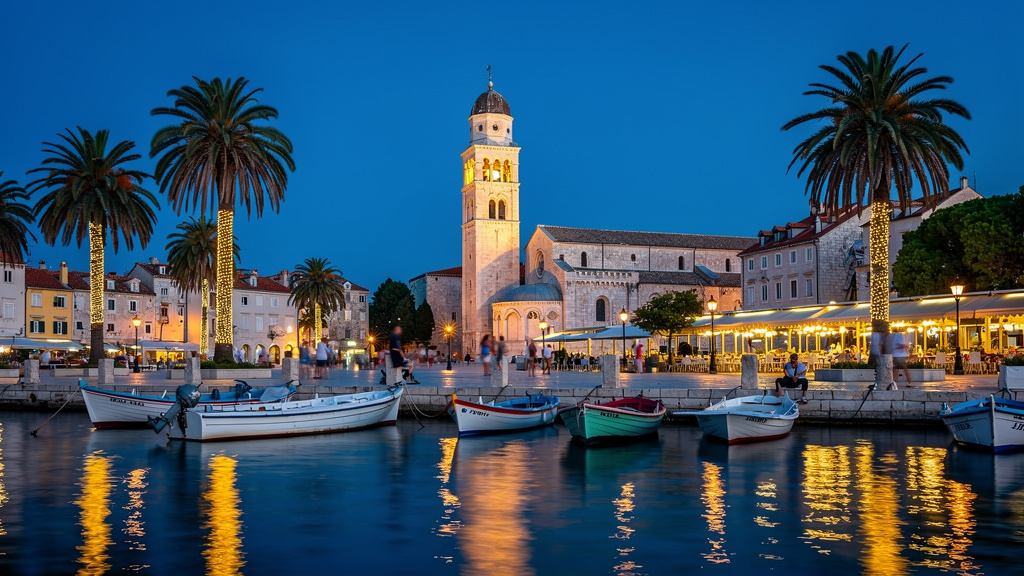
Most old towns are things you visit. Split’s old town is a thing you live inside. When the Roman emperor Diocletian retired in the early fourth century he built himself a palace on the Dalmatian coast, and when the empire receded the locals simply moved in — and never left. Seventeen centuries later the cafés, flats and fish markets are still wedged between the original walls, the cathedral is the emperor’s mausoleum, and the marble of the central courtyard is polished smooth by a hundred generations of feet. Split is the rare city where the headline sight is also the street you walk to buy your morning coffee. In July it is loud, hot, sea-soaked and — for one weekend — the dance-music capital of Europe.
A palace you can live in
Start where the city started. National Geographic’s summer guide to Split reads the layered architecture of Diocletian’s Palace better than most, and the official tourist board’s one-day itinerary is a tidy first-morning route through the Peristyle, the cathedral bell tower and up Marjan hill. For the palace itself — the cellars, the cathedral, the climb up the tower — Kukuvia’s complete palace guide has the current hours and ticket prices. And because the alleyways doubled as the slave city of Meereen, Game of Thrones pilgrims can follow a self-guided filming-locations trail through the substructures and out to Klis Fortress above town.
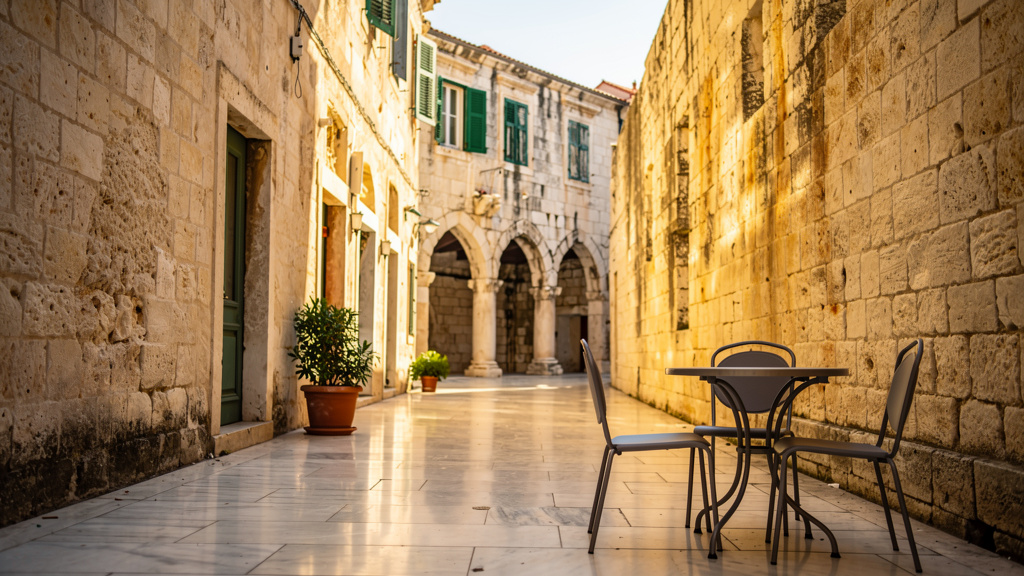
The islands are the point
Split is a wonderful city and an even better gateway — the real Dalmatia is offshore, an hour or two by boat. Wanderlust Chloe’s rundown of day trips and island-hopping from Split is the planning document; the national operator Jadrolinija’s Split–Hvar route page and the seasonal Split–Brač–Hvar catamaran timetable are how you actually do it without a tour. Aim for Brač and its shifting Zlatni Rat, the Golden Horn beach near Bol, or the car-free Pakleni Islands off Hvar, all swimming coves and lunch-only beach clubs. Further out, Vis — the most distant of the big Dalmatian islands, closed to foreigners until the 1990s and all the quieter for it — is the trip for a second island day, with the luminous Blue Cave on neighbouring Biševo as the dawn add-on worth setting an alarm for. Buy ferry tickets the day before in high season — the popular morning catamarans sell out, and turning up at the port at nine is how you lose a beach day.
Peka, black risotto, and where locals eat
Dalmatian food is simple and serious: grilled fish straight off the boat, black risotto inked with cuttlefish, and peka — meat or octopus slow-cooked for hours under a bell-shaped lid buried in embers, which you almost always have to order a day ahead. Frank About Croatia’s where-to-eat-in-Split list is the local-led filter that separates the real konobas from the Riva tourist traps, Time Out’s best restaurants in Split is the independent cross-check, and for the bigger picture World’s 50 Best surveyed the best tables in Dalmatia, several within reach of Split. Order the peka on your first night for your last.
Beaches, and Krka when you need a break from salt
The city has its own swimming. Bačvice, the shallow sandy bay where locals play the splashy local ball game picigin, and the pine-shaded coves under Marjan are all walkable — Split Holiday’s beach guide sorts the sandy from the pebble from the family-friendly. When you have had enough of the sea, the waterfalls of Krka are the classic inland day: Wanderlust Chloe’s Split-to-Krka day trip covers the Skradinski Buk falls, the Skradin boat and the timings that keep you ahead of the coach parties.
Inside the palace walls, or out
The choice in Split is whether to sleep inside the living museum or just beside it. A room within the palace walls means waking to bells and marble and stepping straight into the old town; it also means noise, stairs and no car access. A stay just outside — Bačvice, Veli Varoš, the Riva fringe — buys quiet, a balcony and an easier arrival. This reviewed shortlist of Split’s best boutique hotels, several carved into the palace’s own Roman stone, lays out the trade-off clearly. Whichever you pick, book early for the Ultra weekend — the whole city sells out and the rates triple.
On screen, before you arrive
Two videos to feel the city at street level first:
Split, Croatia — Sun, Sea & Ancient Streets (4K Walking Tour)
Walking OZ
Croatian Food Tour in Split — Ultimate Guide
Chad and Claire
Ultra, and the ferry-port logistics
For three days from 10 to 12 July, Park Mladeži fills for Ultra Europe, the continent’s biggest open-air electronic festival, and the whole city tilts toward it — the 2026 line-up runs from Calvin Harris to Martin Garrix to Armin van Buuren, and the official “Destination Ultra” boat parties and island after-shows spill out across Hvar and Brač for the week. Whether you come for it or carefully around it, the practical notes are the same: Split airport (SPU) sits 25 minutes north near Trogir, the bus and ferry terminals share one waterfront so an island day starts and ends on foot, and Croatia is on the euro now, so the old kuna-exchange dance is gone. If Ultra is not your scene, the weeks either side are when the city is at its summer best without the surge.
Under a month until the gates open at Park Mladeži. The palace cellars and the Marjan coves, the morning catamarans to Hvar, Brač and the Pakleni coves, the order-ahead peka and the Krka waterfalls, and the Ultra Europe line-up itself — all gathered in our Split collection. Save it, book the island ferries before the morning boats fill, and have the peka waiting when you come back salt-crusted from Brač.
Curated using Epic Itineraries. Log in to save this collection to your own plan.