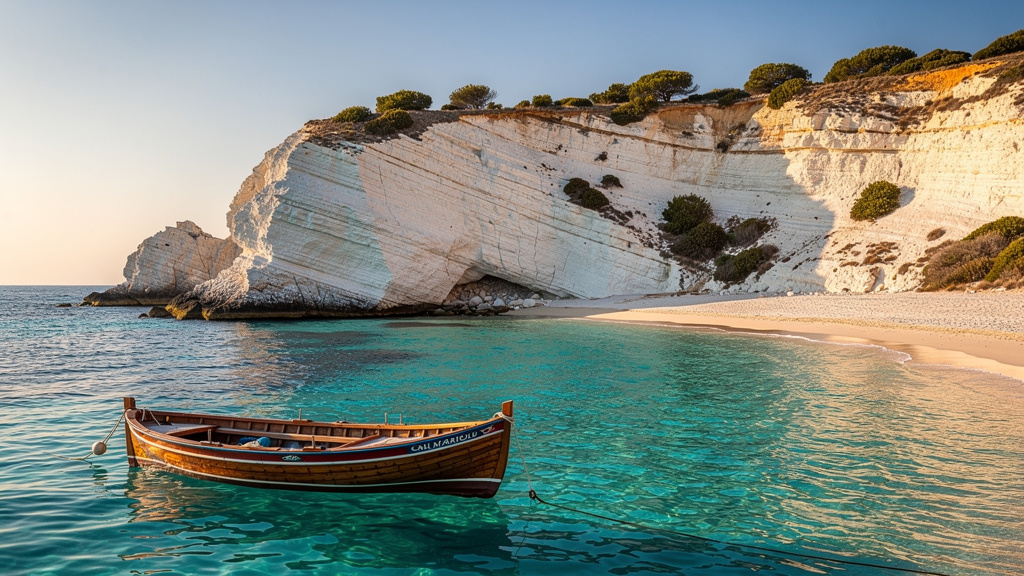
Sardinia does not behave like the rest of Italy. It does not look like the rest of Italy either. The granite of the interior is older than the Apennines, the language has its own grammar and vowels, and the cuisine — myrtle-smoked porceddu, fregula, hand-folded culurgiones — predates the unification of Italy by several centuries. For most of the year, the island gets on with itself. For ten or eleven weeks each summer, the rest of Italy lands on top of it.
The window before that happens is the one to book. Lonely Planet has put Sardinia on its Best in Travel 2026 list, which means the queues are coming. They are not here yet.
Why early summer is the moment
The honest answer is in the weather and the calendar. Lonely Planet’s month-by-month breakdown lays it out cleanly: May still has lukewarm sea and the occasional grey day; July and August are 35°C, beach clubs at €80 a sun lounger, and Italian school holidays in full motion. June is the Goldilocks month. Water temperatures cross 22°C, the maquis is still flowering, and the Olbia ferry queues do not yet stretch around the port.
National Geographic’s December 2024 overview is a good first read for anyone who has not been — it covers the Nuragic heritage, the wines, and the surprising amount of inland mountain that most beach-bound visitors never reach. But if you only have a week, the more useful single resource is a one-week itinerary written by a Sardinian local, which works the south-west of the island around Cagliari, Sinis Peninsula, Bosa, Costa Verde and the small archipelago of Carloforte. The route is honest about what you can fit in seven days without spending half of it driving.
The east coast cliffs and a permit you have to book
Most first-timers come for Costa Smeralda. They should not. The most famous beaches in Sardinia are now the most regulated, and rightly so. The 2026 guide to Cala Goloritzé — the limestone cove with the natural-arch buttress that lands on every magazine cover — explains the new permit system: 250 visitors per day, booked through the Heart of Sardinia app, €7 each, and you walk in. There are days, weeks ahead of time, when the slots are already gone.
The good news is that the Gulf of Orosei is still wide enough that the wider east coast absorbs the load. Cala Mariolu, Cala Luna and Cala Sisine are reached by boat from Cala Gonone, and the local boat-tour cooperative runs a circuit that hits four or five coves in a day — leaving the morning, lunch on the boat, back by late afternoon, no rental car required. For walkers prepared to commit, the Selvaggio Blu — Europe’s hardest official long-distance trek — runs the spine of the same coast over four to seven days, with abseils, water drops and bivouac nights. It is not a holiday hike. It is a project.
Lonely Planet’s beaches round-up is the clean reference if you want to plan around water rather than walks: Spiaggia La Pelosa near Stintino in the north, Cala Brandinchi on the eastern coast, the pink sand at Spiaggia Rosa on Budelli (only viewable from the water — the sand itself has been protected since the early 1990s).
Cagliari, Bosa and the corners of the south
Cagliari does not get the press it deserves. It is the largest city on the island, the principal port, and a layered Phoenician–Roman–Pisan–Spanish–Italian capital wrapped around a hill. Jancis Robinson’s “Eating in Cagliari” piece is the food and wine reference that takes the city seriously — the morning fish market at San Benedetto, the Castello bistros, the small Vermentino and Cannonau lists that most tourist menus miss.
The New York Times’ Laura Rysman went deeper still, framing southern Sardinia — Cagliari, the Sulcis hills, the Campidano plain — as the part of the island that has resisted the Costa Smeralda makeover and still feels like itself. It is the piece to read if you are sceptical that “alternative Sardinia” is anything more than a marketing line.
For the west, the guide to Bosa is the one to save. Pastel-painted houses on a tidal river under a Malaspina castle, walking distance to a wine region most people have never heard of (Malvasia di Bosa, fortified, savoury, almost sherry-like). It is a half-day diversion from Alghero or a full afternoon if you are based on the coast.
The interior that the maps do not foreground
The instinctive Sardinian itinerary — coast, ferry, coast — misses the better half. A field-style report from inland Sardinia is the one to read before you finalise your driving routes: it covers the Cannonau cellars in the Nuoro province, the granite mountain villages of the Barbagia, hand-rolled malloreddus pasta in farmhouse kitchens, and the Gennargentu ridges where mouflon still outnumber visitors. The food alone justifies the detour.
The Orgosolo murals piece explains why a single mountain village ended up with more than two hundred political wall paintings. It is a one-hour stop on a Barbagia loop that also takes in Mamoiada and the carnival masks of the mamuthones, which is one of the strangest tourist attractions in southern Europe and one of the very few that almost no tourists visit.
The unmissable archaeology is Su Nuraxi di Barumini, the UNESCO-listed Nuragic complex an hour north of Cagliari. The Nuraghi are unique to Sardinia — Bronze Age stone towers built between 1900 and 730 BC — and the Barumini site is the largest and best-preserved. Two hours on a guided tour is the right length.
Food and where to actually sleep
Cucina sarda rewards staying with it. Club Oenologique’s six-restaurant shortlist is the highest-credibility curated list we found, weighted to the wine and food trade rather than trip-rating algorithms. A local writer’s eight-restaurant version is the second opinion, leaning further into village kitchens.
Where you sleep is the single biggest variable in the trip. The Costa Smeralda option is a curated one — U.S. News’ 2026 ranking covers Cala di Volpe, Cervo and Pitrizza, and Tablet Hotels’ design-led shortlist goes a step further into properties most travellers have not heard of. Both are on the high end of Sardinian pricing.
The agriturismo route is the other one, and we will name a favourite. La Cucina Italiana’s Sardinia agriturismo round-up features La Colti in the Barbagia, where dinner is six courses of porceddu, fregula, ravioli and seadas with a Cannonau bottle on the table, and the bedroom upstairs is €110 in June. It is the photographic opposite of Porto Cervo, and arguably the more honest version of the island.
A few minutes of footage
Two videos that capture cucina sarda and the wider island at the right pace:
Italian Food in Sardinia! Lobster + Fried Calamari on a Boat
Mark Wiens
Monday Night Travel Highlight: Sardinia Through the Backdoor
Rick Steves' Europe
From Cagliari or Olbia
A practical note: ferries from the mainland (Civitavecchia, Genoa, Livorno, Naples) book up four to six weeks before sailing in June, and direct flights to Olbia and Alghero from European hubs climb in price the same way. Cagliari has the better year-round flight schedule and the more interesting onward drive. Pick your arrival airport based on which half of the island you want first.
Six weeks until Italian school holidays land on the island. Cala Goloritzé permit logistics, Costa Smeralda boutique picks, Barbagia agriturismi with porceddu on the table, Cagliari fish-market eating and Su Nuraxi day-trip notes — all gathered in our Sardinia collection. Save it before the June bookings close and the Olbia ferries fill up.
Curated using Epic Itineraries. Log in to save this collection to your own plan.