There’s a soba shop in northern Okinawa run by a woman who looks about sixty-five. She moves with easy efficiency, ladling rich pork broth into bowls, her movements unhurried. Visitors who ask how long she’s owned the restaurant get a laugh. “Forty-two years. I opened it when I was fifty-three.”
She’s ninety-five years old.
Okinawa does this to visitors — makes you question basic assumptions about ageing, about what’s possible, about whether the life you’re living back home might be missing something essential. The archipelago stretching between Japan and Taiwan has the world’s highest concentration of centenarians. The locals call their longevity secret ikigai — a reason for being — though after spending any time here, you’ll suspect it has more to do with sunshine, sweet potatoes, and the genuine pleasure Okinawans take in simply existing.
This subtropical chain has become Expedia’s second-fastest-growing destination for 2026, with searches up 71%. That makes sense. Travellers want something different now, something authentic. Okinawa offers a Japan that most visitors never see — Ryukyu kingdom heritage, beaches that rival anything in Southeast Asia, and a food culture that makes the mainland seem almost ascetic by comparison.
Understanding where you’re going
Okinawa isn’t quite Japan in the way Tokyo or Kyoto are Japan. For centuries, this was the independent Ryukyu Kingdom, a trading nation that absorbed influences from China, Japan, and Southeast Asia while developing its own distinct culture. Japan annexed it in 1879. America occupied it from 1945 to 1972. Both legacies remain visible — US military bases occupy significant land, while Ryukyu castles and traditions persist stubbornly.
Japan Travel’s official guide provides solid orientation, though it perhaps undersells just how different this place feels. The architecture is different — traditional houses with red-tiled roofs and shisa guardian lions. The music is different — sanshin (three-stringed banjos) rather than shamisen. The pace is different — Okinawans famously operate on “Okinawa time,” arriving late to everything and entirely unbothered by the concept of urgency.
This isn’t a criticism. It’s a feature.
The Blue Zone phenomenon
The Blue Zones research identified five regions worldwide where people live measurably longer, healthier lives. Okinawa is the most studied. Until recently, the island chain had the world’s longest-lived population, particularly women. Diet, community, purpose, natural movement — researchers have dissected every variable.
Japan Travel’s longevity feature goes deeper into the science, but the practical takeaway is simple: spend time here and you’ll understand viscerally why these factors matter. Elders aren’t isolated — they’re integral to daily life, tending gardens, running businesses, teaching traditions. People walk everywhere. The diet is plant-heavy, pork-supplemented, and portion-controlled through the practice of hara hachi bu (eating until 80% full).
You can visit centenarians, tour traditional villages, take cooking classes focused on longevity cuisine. Or you can simply absorb the atmosphere and notice how your shoulders drop, your pace slows, your phone becomes less interesting than whatever’s happening around you.
Beaches and underwater worlds
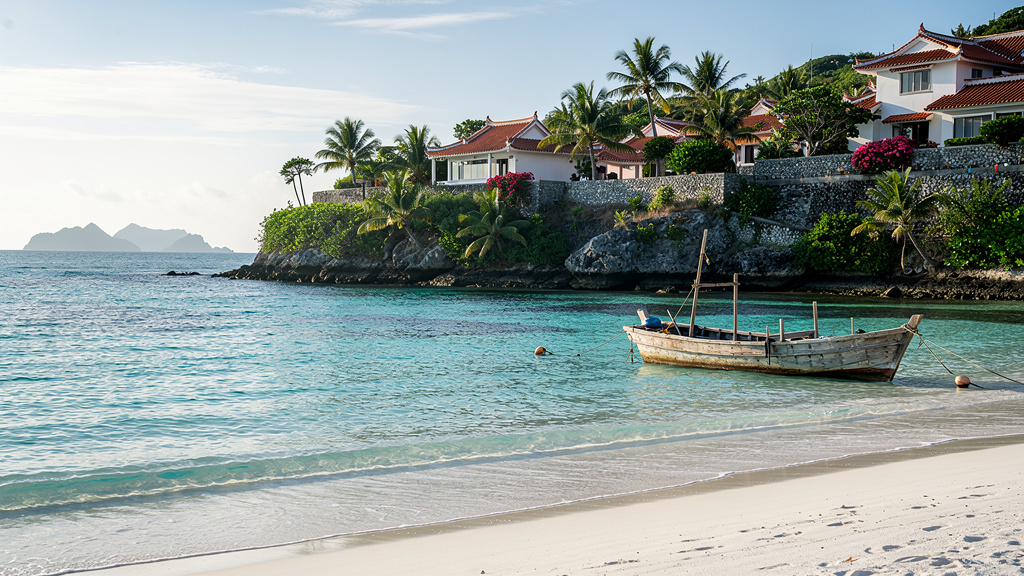
Let’s be clear: Okinawa has beaches that embarrass most dedicated beach destinations. Powder-white sand. Water in shades of turquoise that seem digitally enhanced but aren’t. And because Japan’s excellent infrastructure applies here too, you get those beaches with reliable transport, clean facilities, and not a single aggressive souvenir vendor.
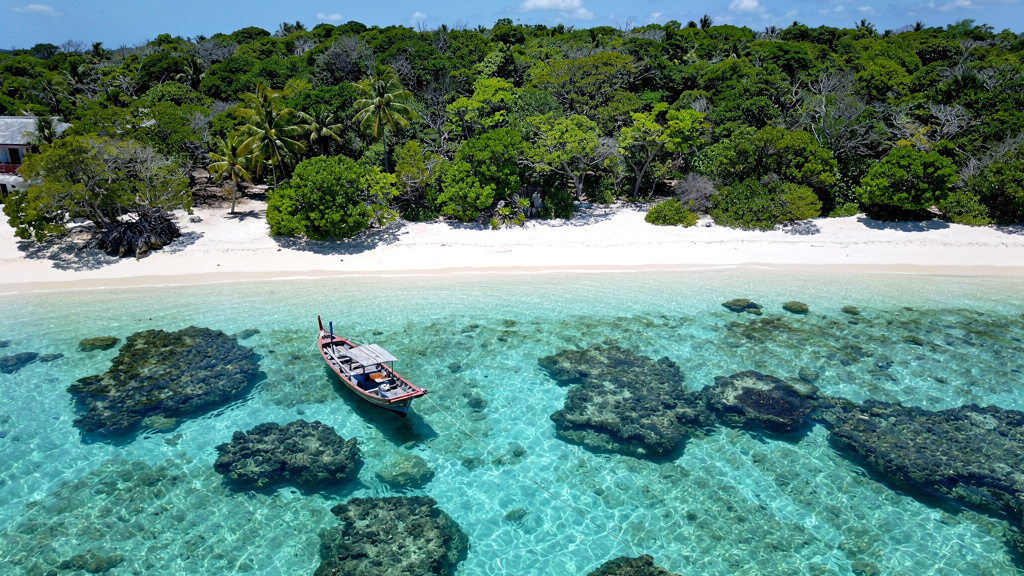
The Kerama Islands, a thirty-minute ferry ride from Naha, are the headline act. Zamami and Tokashiki have been marine conservation areas for decades, and the snorkelling is world-class — visibility routinely exceeds 30 metres. Klook’s Kerama snorkelling excursion handles logistics if you’d rather not navigate ferry schedules, though independent exploration is perfectly feasible.
Visit Okinawa’s comprehensive snorkelling guide covers the main island’s options too. Manza Beach, Cape Maeda’s Blue Cave, the coral gardens around Kudaka Island — you’re spoiled for options. Diving certification opens up even more, including the Yonaguni Monument, a mysterious underwater formation that might be ancient ruins or might be natural rock (the debate continues).
Then there’s the Churaumi Aquarium on the main island’s north coast, home to whale sharks and manta rays in tanks so vast they seem unreal. It’s become something of a cliché, but clichés exist for reasons. Watching a whale shark drift past while schoolchildren press against the glass never stops being extraordinary.
The food question
Okinawan cuisine deserves its own trip. Matcha’s food guide provides excellent grounding, but the basics are these: more pork than the mainland (every part of the pig, consumed in every way imaginable), more bitter melon than you’d think edible, purple sweet potatoes in everything, and soba noodles made from wheat rather than buckwheat.
Rafute (slow-braised pork belly) might be the signature dish — so soft it falls apart, sweet-savoury, impossibly rich. Goya champuru (bitter melon stir-fry) is an acquired taste that most visitors acquire. Okinawan soba, swimming in pork-bone broth, is the island’s answer to ramen and arguably superior. And the purple sweet potato ice cream and tarts found everywhere make for compulsive snacking.
Savor Japan’s restaurant recommendations lean upscale — izakayas doing modern takes on traditional dishes, seafood restaurants with morning-market fish. But some of the best meals happen in places without English menus or foreign visitors. Point at things. Smile. Trust your server. Okinawans are extraordinarily welcoming.
Ryukyu heritage and castle ruins
Before the 20th century’s devastations, Okinawa had castles throughout the islands. Most were destroyed during the Battle of Okinawa in 1945, then rebuilt, then — in the case of Shuri Castle in Naha — destroyed again by fire in 2019. Restoration continues.
What remains is still impressive. Shuri Castle, even partially reconstructed, conveys the Ryukyu Kingdom’s grandeur and distinct architectural traditions (curved red rooflines, dragon decorations, Chinese-influenced layouts). The castle grounds are free to explore, and the surrounding Kinjo-cho stone-paved road is one of Okinawa’s most photogenic walks.
The Invisible Tourist’s unique experiences guide goes beyond the obvious, covering lesser-visited cultural sites, traditional pottery villages, and the sacred groves where Ryukyu priestesses still perform rituals. The traditions here predate both Japanese Shinto and Buddhism, representing something genuinely ancient and genuinely distinct.
Building an itinerary
Most visitors underestimate Okinawa. It’s not one island — it’s 160, of which 49 are inhabited, stretching over 1,000 kilometres from near Taiwan to almost the Japanese mainland. You could spend months and barely scratch the surface.
Japan Uncharted’s itinerary guide offers sensible frameworks for different trip lengths. A week might cover Naha, the main island’s highlights, and a day trip to the Kerama Islands. Gina Bear’s 10-day itinerary adds the outer islands — Miyako, Ishigaki, Taketomi — where the beaches get even better and the pace even slower.
The practical advice: fly into Naha, the prefectural capital, and rent a car for mainland exploration (public transport exists but limits flexibility). Budget two to three days for Naha itself — Shuri Castle, Kokusai Street’s market atmosphere, the pottery district of Tsuboya. Then head north to the beaches and the aquarium. Then, if time allows, ferry or fly to the outer islands.
Where to base yourself
Naha works for first-timers — urban amenities, easy airport access, good restaurant density. The resort areas around Onna and Nago suit beach-focused trips.
For something special, Halekulani Okinawa brings Hawaiian luxury hospitality to Okinawa’s west coast. HOSHINOYA Okinawa takes a different approach — contemporary Japanese design, private beach, immersive experiences like traditional sanshin lessons and coral reef restoration dives. Neither is cheap. Both are extraordinary.
Budget options abound too. Okinawa has guesthouses, business hotels, and apartment rentals throughout the islands. Outside peak seasons (Golden Week in early May, summer holidays in August), prices are remarkably reasonable for the quality offered.
The 71% question
Why now? Why are searches up 71%?
Some of it is post-pandemic travel reshuffling — people seeking destinations that feel distinct, that offer more than generic beach or city experiences. Some is the longevity angle, which has gained media attention as wellness travel matures beyond spa weekends. Some is simply Japan’s broader tourism boom reaching places beyond Tokyo-Kyoto-Osaka.
But mostly, people are discovering what Okinawans have known for centuries: that a slower pace isn’t wasted time, that community matters more than accomplishment, that the best beaches aren’t necessarily the most famous ones.
That soba shop owner has a habit of asking visitors where they’re from, what they do for work, whether they have children. Then she nods, satisfied. “You should stay longer,” she tells them. “There’s no rush.”
She’s right.
Start planning your Okinawa adventure with our curated Okinawa collection — beaches, cultural sites, and longevity experiences all in one place.