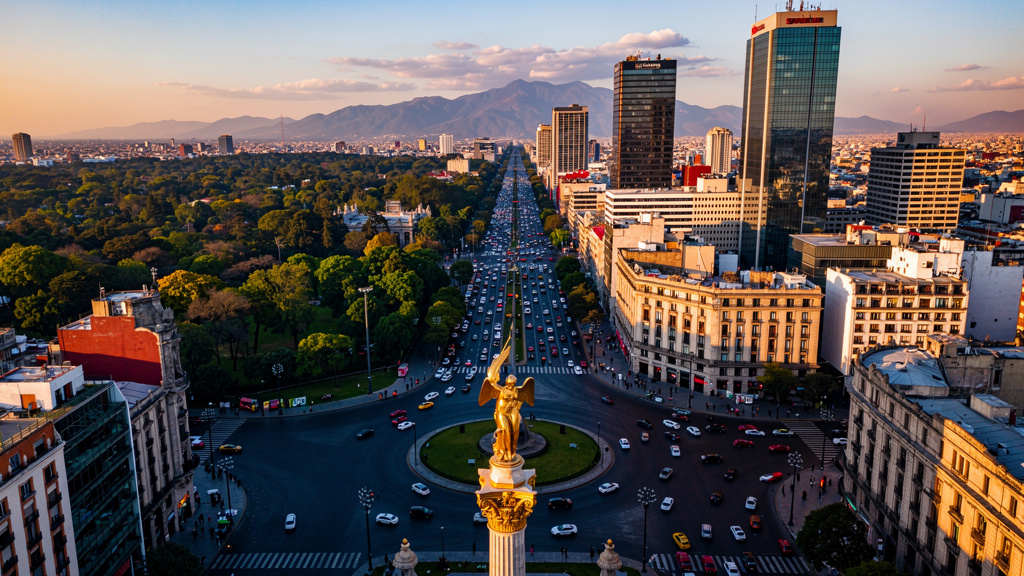
On 11 June 2026, a referee’s whistle in the south of Mexico City starts not just a match but a tournament. Mexico play South Africa at the Estadio Azteca, and with that kick-off the largest stadium in Latin America becomes the first venue in history to host three World Cup opening matches — 1970, 1986 and now 2026. No other ground has done it twice, let alone three times. For a fortnight either side of that date, a city of nine million that already runs at full volume turns the dial further.
If you have a ticket to one of the five matches the city will host between 11 June and 19 July, the football will take care of itself. What most visitors underestimate is everything around it: a capital with more museums than almost anywhere on earth, a dining scene that runs from a 30-peso taco to the tasting menus the rest of the world flies in for, and neighbourhoods you could happily spend a week in without going near a stadium. Euronews’s host-city guide, published in the week the tournament opens, is the most current overview — and refreshingly honest about the altitude, the traffic and the air on a still day.
The match, and the city’s biggest screen
The opener is a Group A fixture with Mexico on home soil, which means the energy in the city will be unlike a normal matchday anywhere. Matador’s fan-focused 2026 guide is the one to read for the practical side: which of the five Azteca matches to chase, where the good soccer bars are, and how to get to the ground without a car. For the historic weight of what the stadium is about to do, FIFA’s own piece on the Azteca lays out the 1970–1986–2026 hat-trick.
You do not need a ticket to feel the tournament. The official Fan Festival runs in the Zócalo — the vast central square beside the cathedral and the Templo Mayor ruins — for the duration, with giant screens and the kind of crowd that turns a goal into a citywide roar. Lonely Planet’s guide to the Centro Histórico is the best companion for the historic core you will be standing in while you watch.
Where the city actually lives — Roma, Condesa, Coyoacán
Most visitors base themselves west of the centre, and with good reason. This neighbourhoods guide maps the practical differences: Roma Norte for independent food and bars, Condesa for tree-lined calm around Parque México, Polanco for the polished end. Roma and Condesa run into each other and reward slow wandering — these sixteen reasons to love the two barrios capture why so many travellers never leave them.
Build the rest around a loose plan rather than a checklist. A one-week itinerary gives you the comfortable version; a tighter three-day local’s route is better if the football is eating your days. Either way, leave a morning for Coyoacán, the cobbled southern village where Frida Kahlo lived and painted. Her Casa Azul sells out days ahead in summer, so book before you fly. For the wider lie of the land — safety, money, getting around — this 2026 city guide is the most useful single read.
Eating, from a kerbside griddle to Pujol
This is the reason a lot of people come, World Cup or not. The city’s genius is that the 30-peso taco and the world-famous tasting menu are both worth your time. Start at street level: this taco tour and itinerary is a practical crawl through suadero, al pastor and the carts worth queuing for. When you want the other end, the city’s best-restaurants guide for 2026 covers the spread, and the nine CDMX kitchens on the World’s 1,000 list tells you which tables to book weeks out — Pujol’s thousand-day-aged mole among them.
Then there is the drinking. Mexico City’s bar scene is among the best on the continent, from natural-wine rooms to mezcalerías where the pour comes with a quiet lesson in agave. The Infatuation’s nineteen-bar guide is the one to trust, and it includes a couple of rooms that sit on the World’s 50 Best Bars list.
The day you leave the city — Teotihuacán and lucha libre
Two experiences justify breaking the neighbourhood rhythm. The first is Teotihuacán, the pyramid complex an hour north-east, where the Pyramid of the Moon reopened to climbers in 2025 after years closed — this pyramids day-trip guide covers the dawn slot and the hot-air-balloon option that turns it into a morning you remember. The second is pure theatre: a Friday-night lucha libre card at Arena México, masked technicians against rule-breaking rudos, the crowd doing half the work. This first-timer’s guide to lucha libre tells you where to sit and what is actually going on.
Roma, Condesa or Polanco
Where you sleep shapes the trip. Roma and Condesa put the best independent food and bars on your doorstep; this boutique-hotel guide to the two neighbourhoods covers the design-led stays in walking range of everything above. For the higher end — Polanco’s grand hotels and the new wave of luxury openings — the MICHELIN guide to the city’s hotels is the cleaner reference. Book early: the World Cup has pulled summer availability forward by months.
Press play before the flight
Two food-led films to set the appetite:
Extreme Mexico City Street Food Tour with 5 Mexican Guys, CDMX
Mark Wiens
Eating Huarache, Tacos & More in Mexico City — Epic Food Journeys with Mark Wiens
National Geographic
Getting there and around
A word the guides keep repeating, and rightly: altitude. The city sits at roughly 2,240 metres, so pace the first day or two — especially if a stadium night is bookended by a late one. Skip the car for matchdays; the Metro reaches the Azteca on the cheap (Line 2 to Tasqueña, then the Tren Ligero light rail to Estadio Azteca, a few pesos all in), and traffic near the ground is its own event. Uber and the Metro between them cover almost everything else.
Eight days until the opening whistle at the Azteca. The five-match schedule and the Zócalo Fan Festival, the Roma–Condesa taco crawls and World’s-50-Best bars, Casa Azul and a Friday-night lucha card, and the dawn climb up Teotihuacán’s Pyramid of the Moon — all gathered in our Mexico City collection. Save it, sort your matchday metro, and let the city out-sing the stadium.
Curated using Epic Itineraries. Log in to save this collection to your own plan.