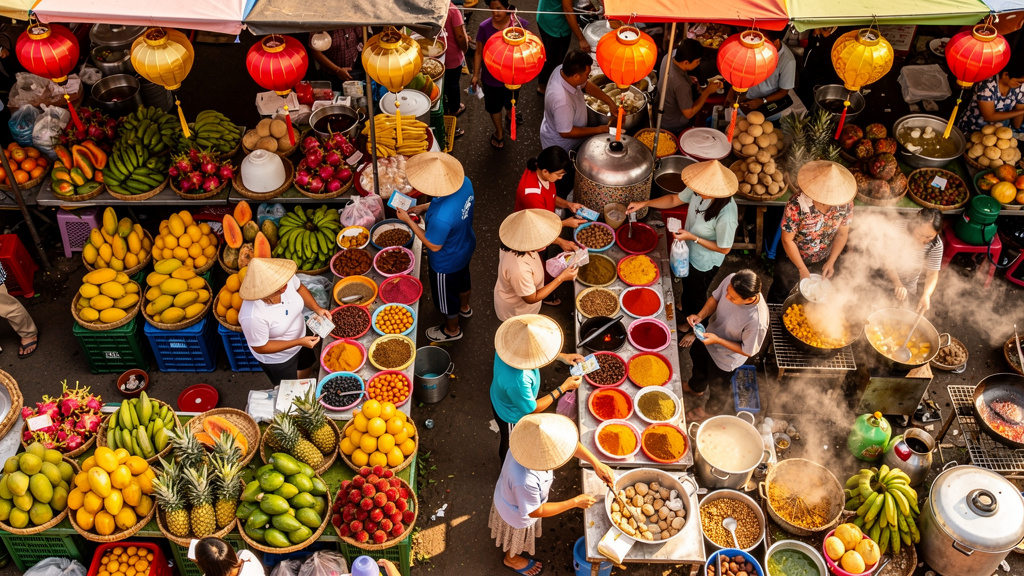
The best travel memories almost always involve a table. A plate of something you did not expect. A flavour that rewired your understanding of what a familiar ingredient could be. The moment when you realise the dish you have been making at home for years tastes nothing like this, here, where it came from.
Travel and food are inseparable. The question is not whether to eat well when you travel — of course you will try to eat well — but whether food should drive the destination choice itself. For a certain kind of traveller, the answer is obvious. You do not pick a city and then find restaurants. You find the restaurants, the markets, the food culture, and then you plan the trip around them.
2026 offers extraordinary options. Traditional food destinations are reaching new heights. Emerging scenes are becoming impossible to ignore. And the infrastructure for food travel — cooking classes, food tours, agriturismo stays, farm-to-table experiences — has never been more developed.
Where the serious publications are pointing
When Michelin publishes a destination list for food lovers, the reasoning comes from their global network of anonymous inspectors who have been eating professionally for over a century. Their 16 picks for 2026 span every continent and every budget. This is not merely about starred restaurants — it covers cities where the entire food culture rewards attention. Tokyo’s kissaten coffee shops. Lima’s cevicherias. The trattorias of Emilia-Romagna where the pasta is made by grandmothers who learned from their grandmothers.
For North American travellers, Michelin’s focused guide to the continent’s food destinations narrows the field to the cities and regions that are genuinely leading right now. Mexico City’s position is assured, but the American regional scenes — Texas barbecue, California produce, the new Southern cooking — get proper attention.
Timeout’s global food destinations list takes a more adventurous, street-level approach. Expect cities where the food scene is exploding but has not yet been canonised by the establishment. Hawker centres get equal billing with tasting menus. The vibe is democratic: the best food is not necessarily the most expensive food, and the places where locals actually eat often outperform the places tourists queue for.
Wanderlust Chloe’s food destination guide adds a personal dimension. Her picks lean towards the photogenic — markets with character, restaurants with views, regions with visual drama. If you want food travel that also produces enviable photographs, this is where to find the overlap between delicious and beautiful.
Slowing down on the farm
Not every food trip needs to be a restaurant crawl. Some of the most memorable culinary travel happens when you slow right down — staying on a working farm, eating what grows around you, learning to cook from the people who know the land.
Italy’s agriturismo tradition is one of the great inventions of modern travel. A working farm that takes guests. Meals made from what the farm produces. Wine from the vineyard you can see from your bedroom window. Olive oil pressed that morning. Pasta made with flour from the estate.
Farm Stay Planet’s guide to the best organic agriturismos for 2026 covers the options worth booking. The emphasis on organic is meaningful — these are farms where the commitment to the land goes beyond marketing. You eat what they grow, prepared the way they have always prepared it, in settings that have been feeding guests for generations.
This kind of travel rewires your relationship with food. When you have watched the cheese being made, helped pick the tomatoes, eaten dinner with the family who raised the pig, you come home with more than photographs and a full stomach. You come home understanding something about where food comes from that no restaurant can teach.
The essential reading
Before you go anywhere, read Jodi Ettenberg’s Food Traveler’s Handbook. She literally wrote the book on food travel, and the practical wisdom accumulated across years of eating her way around the world is invaluable.
How do you find great food in an unfamiliar city? How do you navigate dietary restrictions in a country where you do not speak the language? How do you eat adventurously without ending up ill? The handbook covers the questions that guidebooks ignore. It is the kind of resource that changes how you approach every trip, not just the next one.
Ettenberg’s writing comes from genuine experience. She left a legal career to travel and eat, and the depth of her knowledge shows. The handbook is not about specific destinations — it is about the skills and instincts that make food travel rewarding anywhere.
See the full collection
These links were curated as a live collection on Epic Itineraries. Browse them all, save your favourites, and start building your food travel research:
View the full Food Lover’s Travel collection
These links were curated using Epic Itineraries — a free tool for saving and organising travel research. Start your own collection