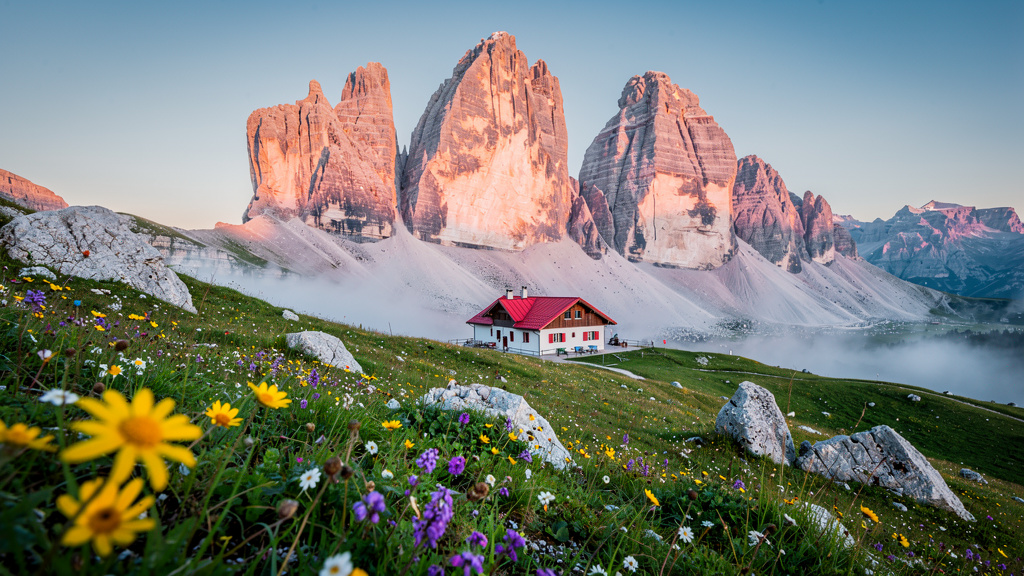
The Dolomites keep short hours. For most of the year the pale limestone towers of this corner of north-east Italy are locked under snow, the cable cars idle and the mountain huts shuttered. Then, for roughly fourteen weeks from the middle of June, the whole range opens at once — the lifts spin up, the high trails clear, the rifugi light their kitchens — and the most theatrical mountains in Europe become walkable for anyone with a decent pair of boots. Get the timing right and you are inside a landscape that looks invented. Get it wrong and you are looking at a closed gondola and a snowfield. Summer 2026 is the window, and it is a narrow one.
The signature walks
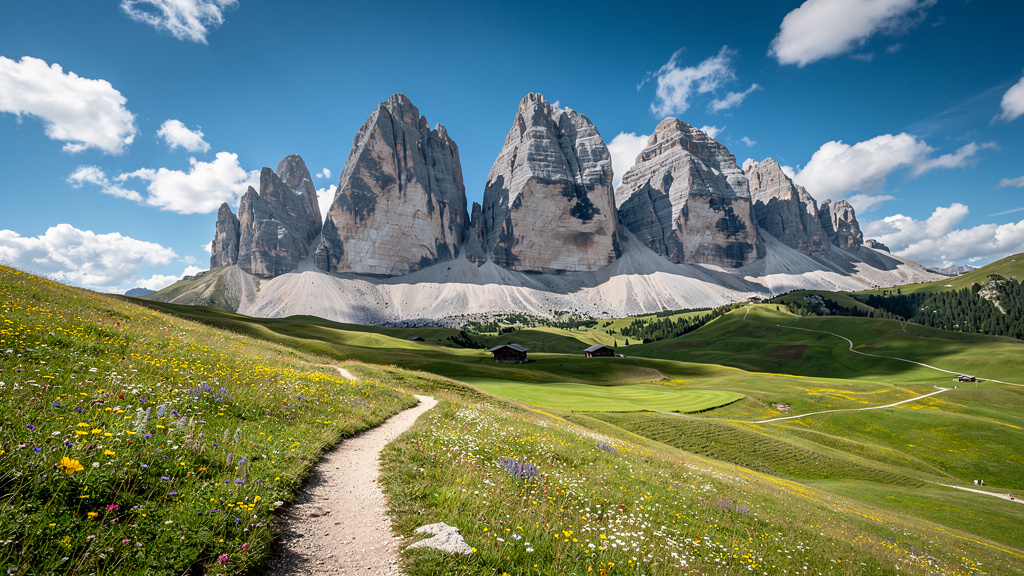
Two walks define a first Dolomites trip, and both earn it. The loop beneath the Tre Cime di Lavaredo — three vertical fins of rock standing alone above the scree — is the postcard made real, and this definitive guide handles the one piece of friction, the Rifugio Auronzo toll road, along with the bus alternative and which way round to walk it. The other is the Seceda ridgeline, a saw-tooth wall of peaks you reach by cable car from Ortisei and then simply walk along, the ground falling away on both sides. For everything beyond those two, the official UNESCO Dolomites hiking hub and Much Better Adventures’ honest round-up of the best hikes — which is candid about June snow lingering on the higher routes — will fill a week.
The lake everyone wants, and the system you need
Lago di Braies — the mirror-still, turquoise lake ringed by peaks that every algorithm on earth has shown you — comes with paperwork. From 1 July to 15 September the access road is closed to private cars, and you must pre-book a parking-and-shuttle slot or arrive before the barrier drops. Plan around it and the lake is still worth it; Throne & Vine’s guide to Braies without the crowds times the light and the lakeside circuit so you see it the way the photos promise. The same daytime-driving logic governs Alpe di Siusi, Europe’s largest alpine meadow, which is at its best in the late-June wildflower bloom and is reached by gondola rather than car for most of the day.
The summer itself is not one season but three. Late June is the wildflowers and the longest light, but with snow still lingering on the highest cols and some huts not yet open. July and August are the guaranteed weather and the full lift network — and the crowds, the sold-out rifugi and the 7am scramble for the Tre Cime car park. The first half of September is the quiet reward: warm days, thinning trails, the larches not yet turned, and huts that still answer the phone. If your dates are flexible, aim for the shoulders of the window rather than its loud middle.
Valley base or mountain hut
This is the real decision of a Dolomites trip: sleep in a valley town and day-hike, or go up and stay up. The rifugi — working mountain huts, half-board, bunk-rooms or the occasional private room — are the soul of the range, and this guide to how the huts actually work demystifies the booking-by-email, the etiquette and the half-board rhythm before you commit. The classic way to string them together is the Alta Via 1, the 120-kilometre hut-to-hut traverse from Lago di Braies that needs no technical skill, only legs and a head for booking ahead. For a single unforgettable night, Rifugio Lagazuoi sits at 2,752 metres above Passo Falzarego with a terrace that catches the enrosadira, the alpenglow that turns the rock pink at dusk; in the Brenta group to the west, Rifugio Alimonta is the via-ferrata hiker’s classic base.
Canederli, speck and a three-star table
The food up here is its own reason to come, and it is not really Italian — it is South Tyrolean, a mountain cuisine of dumplings, cured speck and dark bread that owes as much to Austria as to Rome. Throne & Vine’s guide to the must-try foods of South Tyrol is the primer for canederli, schlutzkrapfen and the cheeses, and the trilingual Ladin culture of the Val Gardena and Val Badia is the deeper story behind the place names. At the apex, St. Hubertus in San Cassiano holds three Michelin stars and a green one for Norbert Niederkofler’s “Cook the Mountain” cooking — the single best dinner in the Dolomites, and one to book months out.
The landscape, on screen
Two films to see the range in motion before you arrive:
Italian Dolomites: 21 Travel Tips You Need To Know
RyanTravels
The Most Scenic Hike in the Dolomites — Ortisei to Seceda (4K)
Samant
A few things worth knowing about the Dolomites
A car earns its keep here in a way it rarely does in Italy — the great mountain passes, the Giau and the Falzarego and the Sella, are half the experience, and Anywhere We Roam’s seven-day road-trip itinerary chains them with the airport logistics from Venice (about two hours) and Innsbruck. Above Cortina d’Ampezzo, fresh from co-hosting the 2026 Winter Olympics, the Lagazuoi tunnels via ferrata threads a First World War tunnel system through the mountain — a beginner-friendly, history-soaked introduction to the iron-runged routes the range is famous for. One rule governs all of it: nothing high opens before mid-June, and the first September snow can close it again early. Check the lift dates against your booking, not the other way round.
The trails are open now, and they close with the first snow. The Tre Cime loop and the Seceda ridge, the Lago di Braies booking system, the Alta Via 1 huts and a night at Rifugio Lagazuoi, canederli and the three-star table at St. Hubertus — all gathered in our Dolomites collection. Save it, book the rifugi before they fill, and stand on the Seceda ridge while the rock is still pink.
Curated using Epic Itineraries. Log in to save this collection to your own plan.